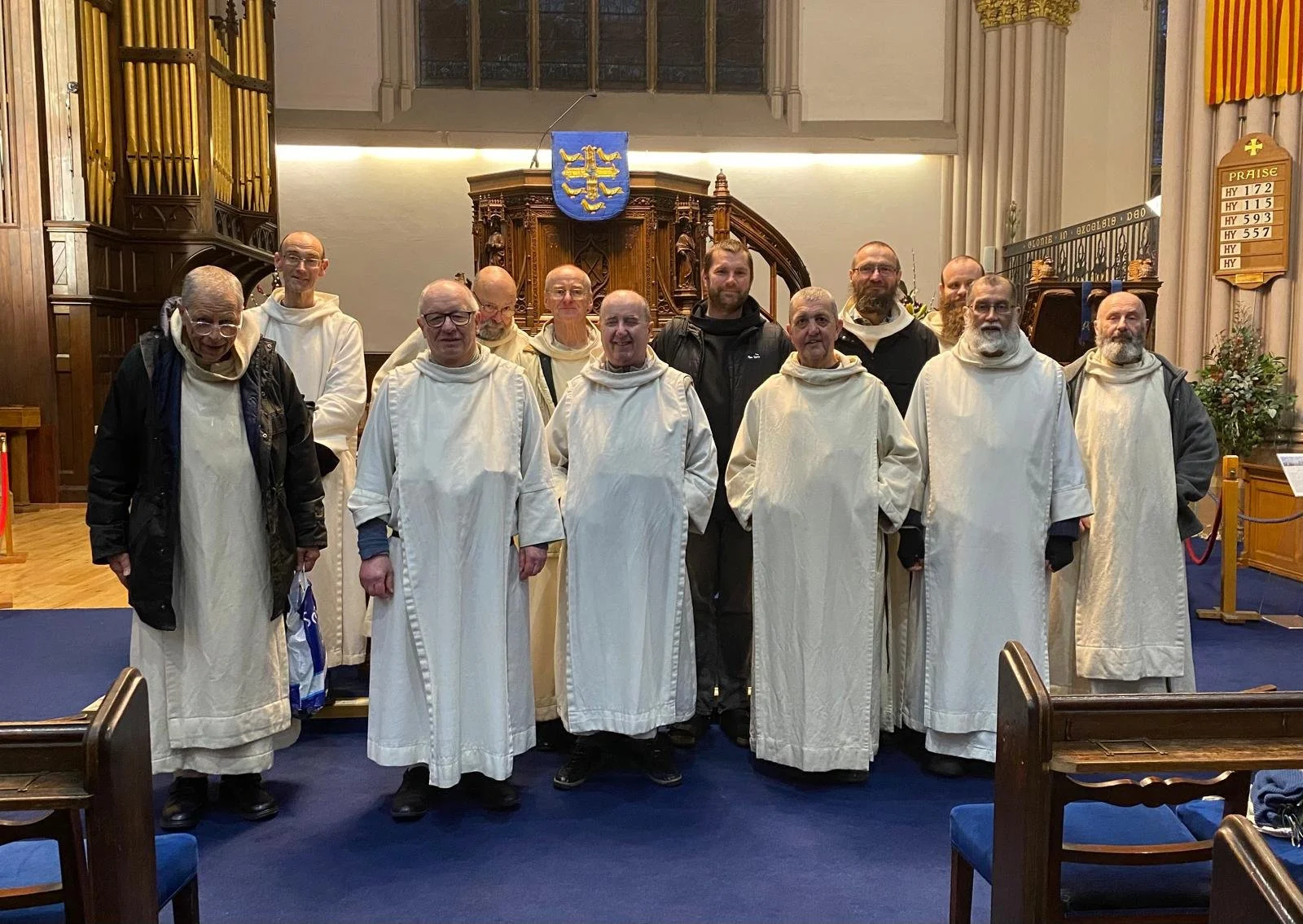
On Monday 16 November, Feast of St. Margaret of Scotland 2026, the Pluscarden community went on Pilgrimage to Dunfermline. The specific intention of this Pilgrimage was to pray for new vocations for our community, especially through the intercession of St. Margaret. Our Pilgrimage was the initiative of Fr. Prior Simon, and was prepared for by a novena of daily prayers before the Blessed Sacrament. Our public prayer for vocations used the text we shared at this year’s summer Diocesan Pilgrimage. It’s given in our web site report on that:
https://www.pluscardenabbey.org/newsandevents/2026/7/5/annual-diocesan-pilgrimage-to-pluscarden-sunday-28-june-2026
Our St. Margaret Pilgrimage had a two-fold destination: first to visit St. Margaret’s Catholic Church in Dunfermline, with its relics of St. Margaret, and then to visit the ancient Benedictine Abbey there.
Pluscarden Community Pilgrimages are certainly rare, though not unprecedented. In 1986 we all attended a celebration, led by the assembled Scottish Catholic Bishops, at the ruins of Melrose Abbey: 800 years after its foundation. Of course the Cistercian monks of Nunraw were also present for that: they hosted our community in their guest house then for two nights.
Then, as part of our celebration of the Great Jubilee of the Year 2000, we visited Iona Abbey. That also had been a Benedictine Monastery: like Pluscarden founded in 1230, and like Pluscarden its restoration from ruin was begun in 1948. For that occasion we stayed two nights at the Craig Lodge House of Prayer, Dalmally.
Then in 2010 Pope Benedict visited Scotland, and so, in a single day, we travelled down to participate in his most memorable Mass in Bellahouston Park, Glasgow.
This recent visit to Dunfermline was also accomplished in a single day. A light sprinkling of snow covered the ground as we set out by coach, so the temperature was certainly cool: but the sun shone brightly, showing off to best advantage the famously beautiful scenery en route.
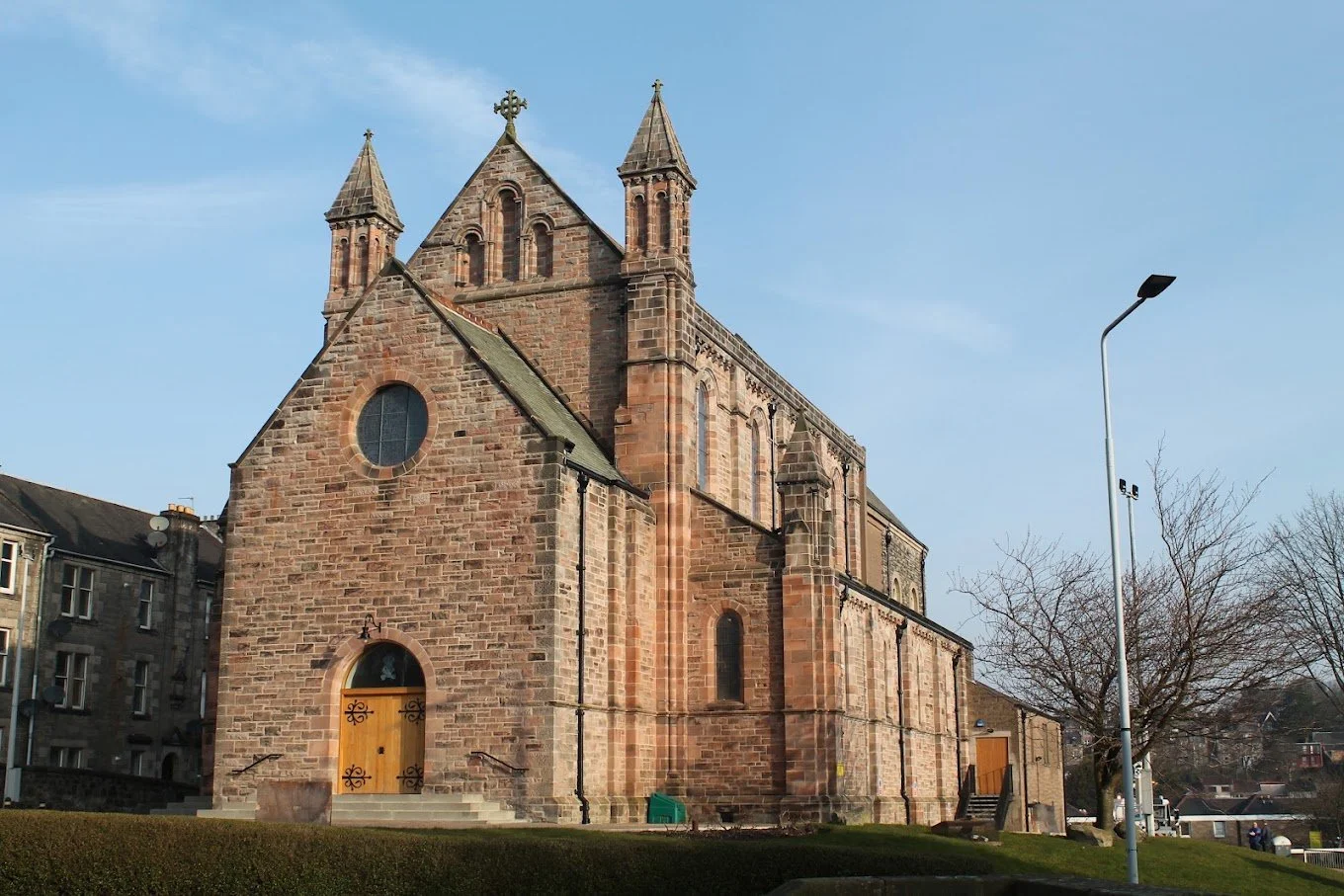
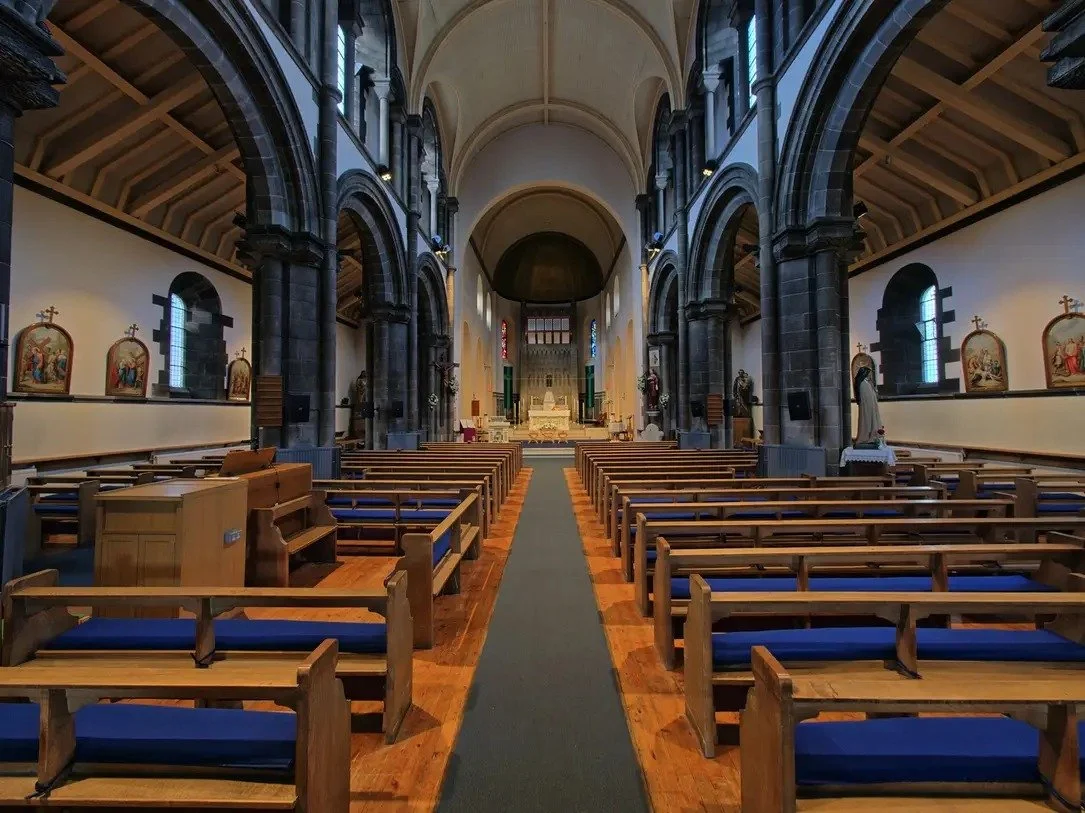
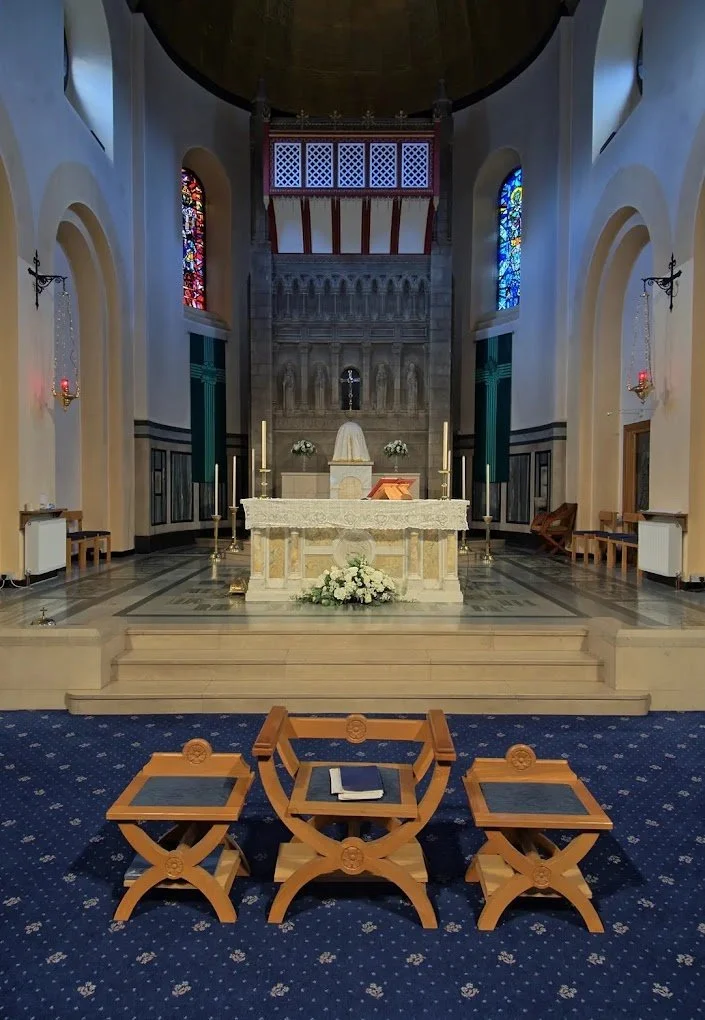
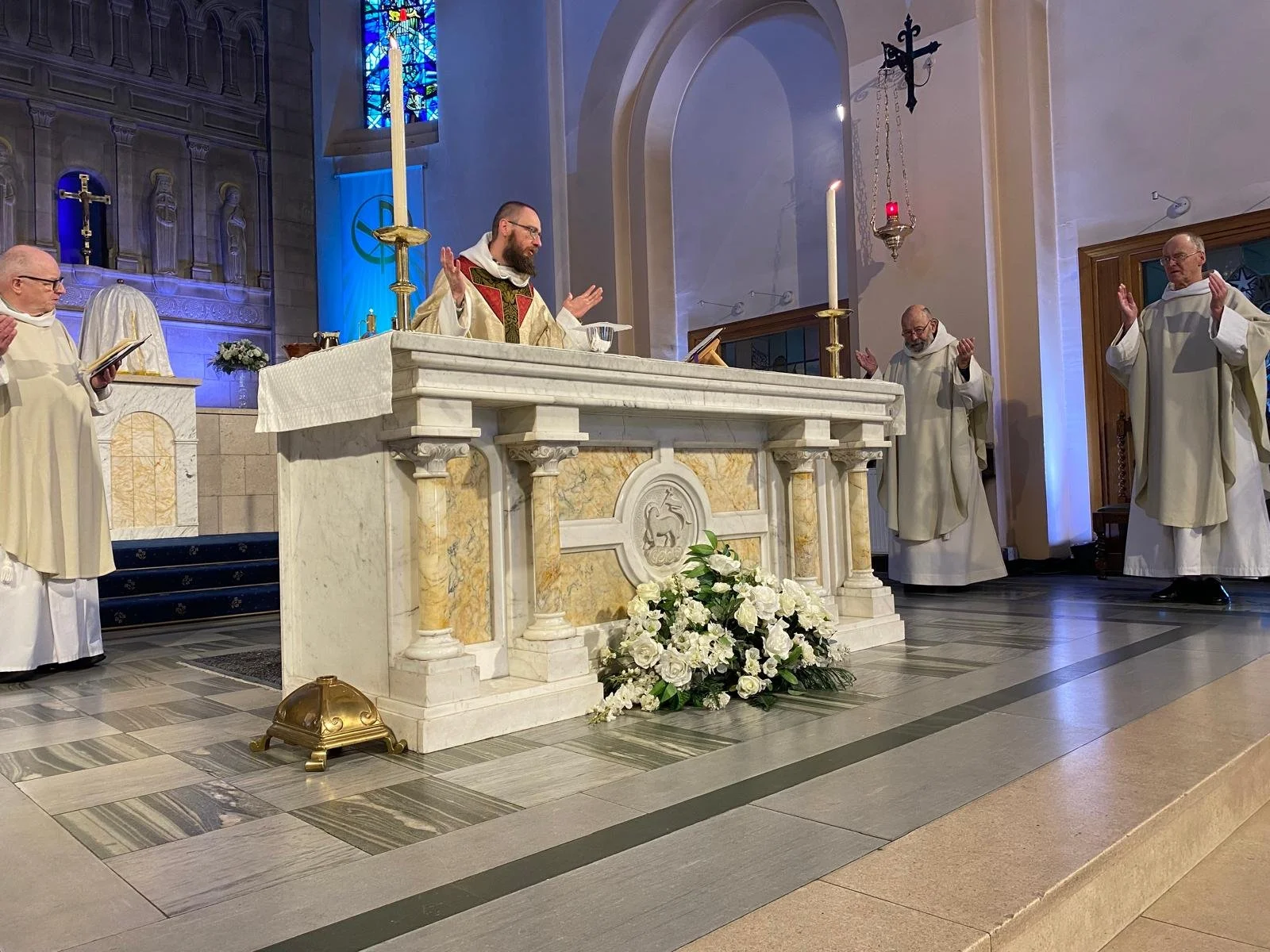
Arriving in good time at the magnificent Dunfermline Catholic Church, we celebrated Mass there at Noon. Of course it was a Mass for the Feast of St. Margaret, all carried out exactly as we have it here at Pluscarden: sung in Latin, with incense, and with the Ordinary and Proper Gregorian Chants sung in full. After Mass we sang Sext in the Lady Chapel, where also we were able to venerate the Relic of St. Margaret that’s displayed there. After a welcome lunch, generously provided and served by local parishioners, we moved on to the great Abbey, which now belongs to the Church of Scotland.
There we sang Vespers. Surely this was the first time Vespers – or most likely any other Catholic service whatever - had been celebrated there (and by Benedictine monks!) since 1560.
For the benefit of interested readers, some historical details about St. Margaret and the two Churches we visited are provided below:
St. Margaret of Scotland was born in Hungary in 1045. She died in Edinburgh in 1093. She was a member of the Anglo-Saxon House of Wessex, and therefore closely related to the Kings of England. Following the Norman Conquest of 1066 she fled to Scotland, where in 1070 she married King Malcolm III Canmore. Quite possibly they had known each other in England at St. Edward the Confessor’s court some years before that; they may even have been informally engaged. Malcolm’s former marriage notwithstanding, their marriage was both happy and fruitful, and the couple were blessed with 8 children. As Queen, Margaret exercised a decisive and lasting influence over her husband and his Kingdom. She is remembered especially for her piety, and her care for the poor. As a strong promoter of Church reform, she guided the Scottish Church towards a closer alignment with the mainstream of the Latin West. Symbolic of that effort was her establishment in 1072 of Benedictine monks at Dunfermline from Lanfranc’s Canterbury.
Margaret’s Chaplain, Archbishop Turgot, wrote an account of her life. He was in no doubt that she was a living Saint. Margaret died as news was brought to her of the death of her husband and eldest son in battle against the Norman English. She was buried before the High Altar in her own Monastic Church at Dunfermline.
King Alexander II, who established Pluscarden Priory in 1230, was Queen Margaret’s great-great grandson. He petitioned the Pope to canonise Queen Margaret. After proper enquiry, Pope Innocent IV did so, shortly after Alexander’s death, in the year 1250. Immediately following the canonisation, Margaret’s remains were moved to a specially built Shrine Chapel to the East of the Dunfermline Chancel. During the centuries following, St. Margaret’s Shrine was the focus of much popular veneration. Following her, some 11 other Scottish Kings and Queens, including King Robert the Bruce, came to be buried at Dunfermline Abbey.
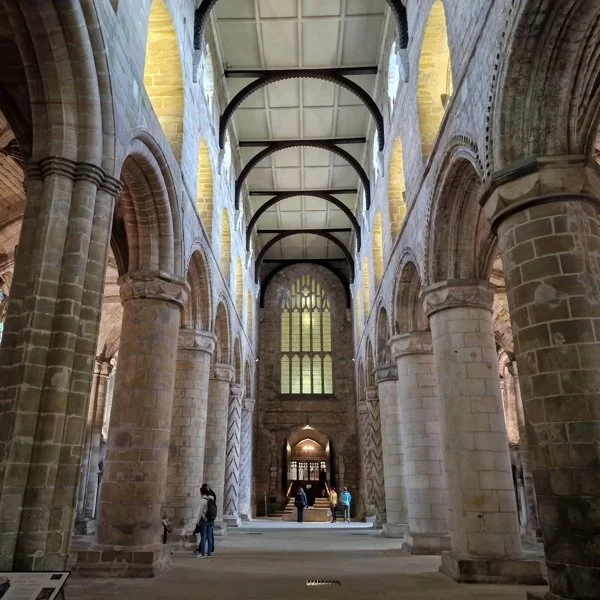
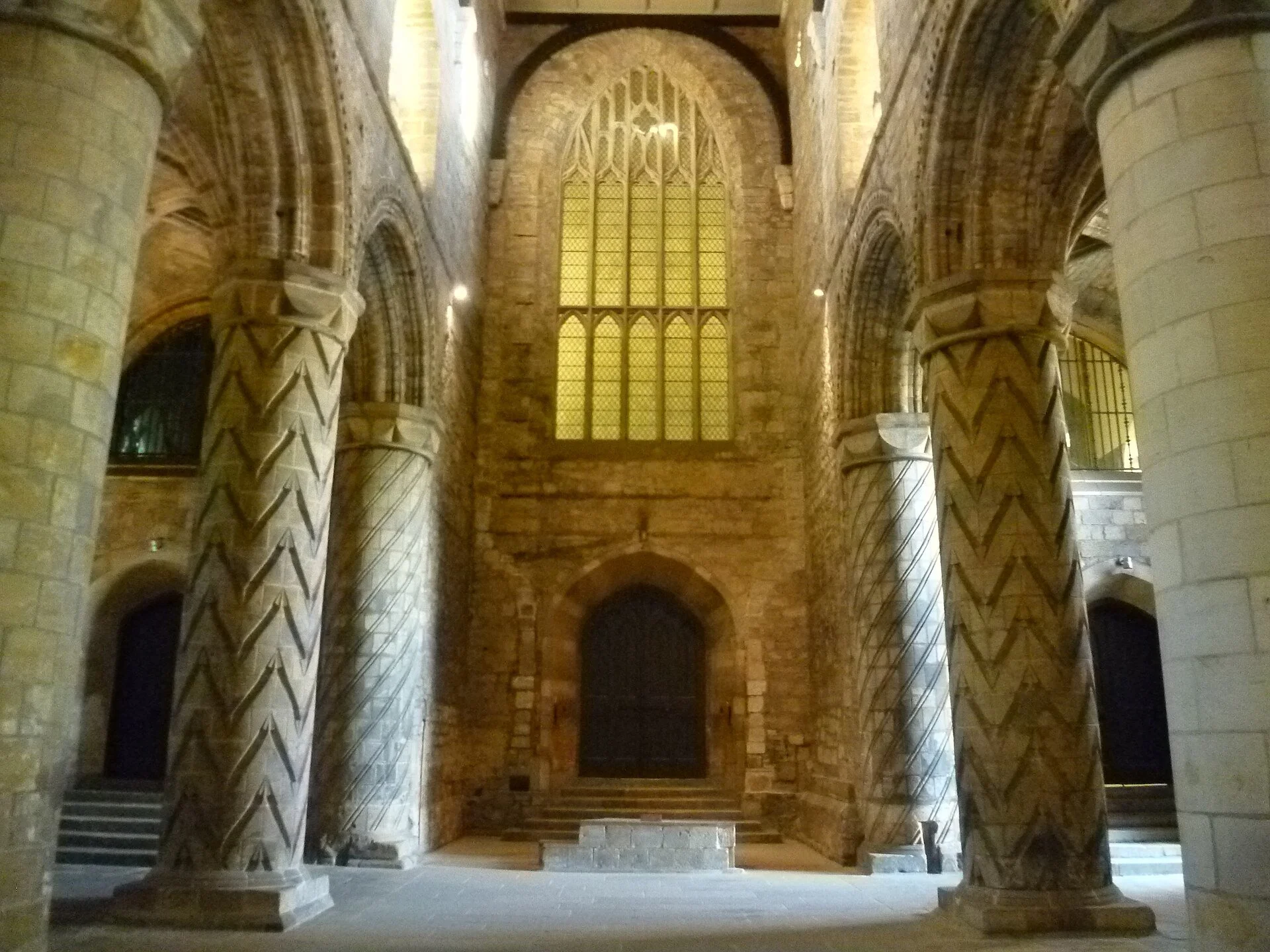
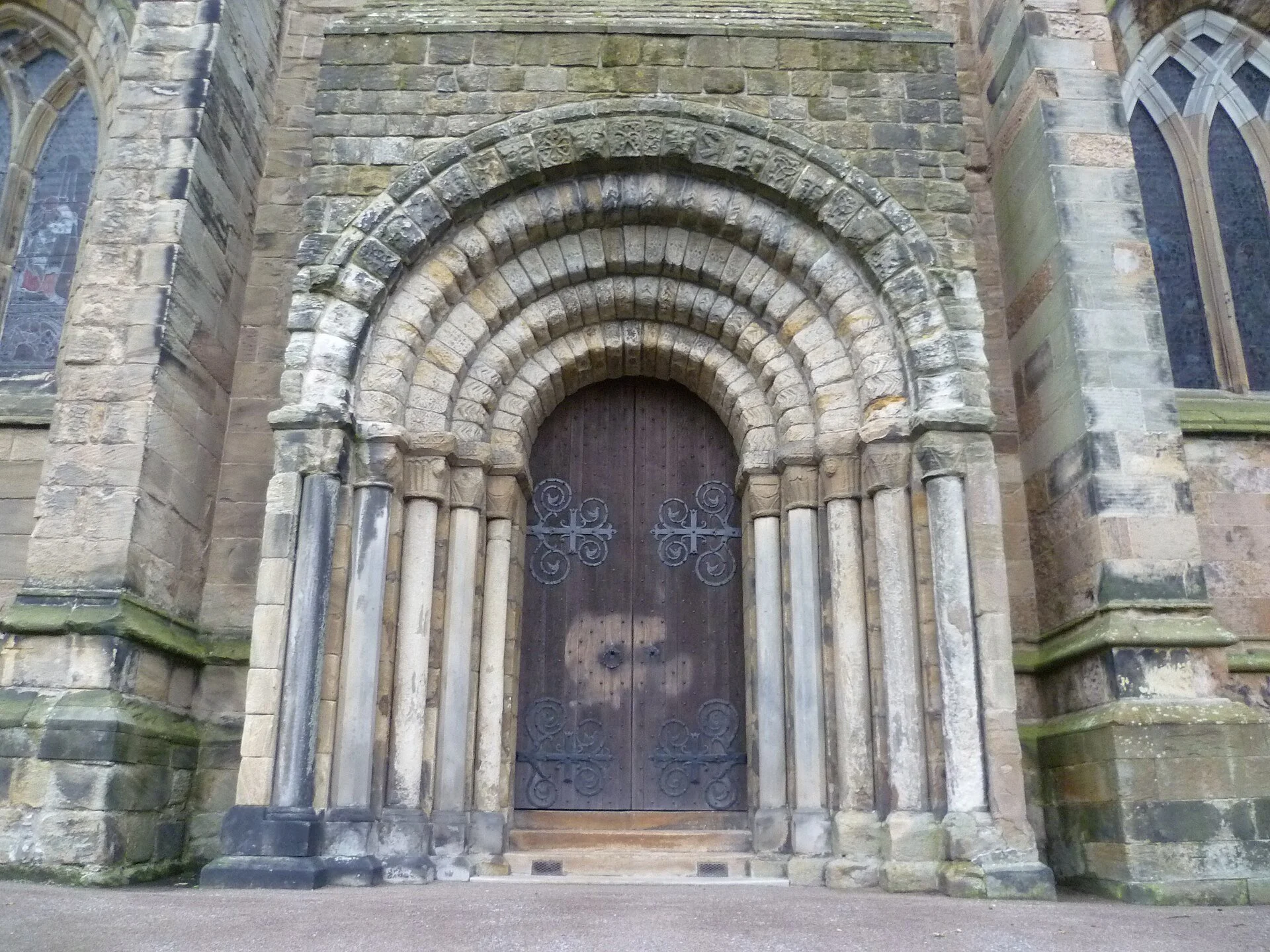
The Romanesque Abbey Nave that stands now at Dunfermline, so reminiscent of the Cathedrals at Durham and also Kirkwall in Orkney, was built over the more modest structure put up in the time of Margaret. It is all the work of Margaret’s son King David I: Scotland’s greatest Church builder. King David also incidentally founded the Cistercian Abbey of Kinloss, just over the hill from Pluscarden, and the Benedictine Priory at Urquart, just on the other side of Elgin. Pluscarden of course was united with Urquart in around 1454. The single stone which we now have from Urquart Priory has a “dog tooth” ornamentation, very similar to that adorning the doorways at Dunfermline Abbey (see the article about that stone posted 3 September 2024).
https://www.pluscardenabbey.org/newsandevents/2024/9/2/an-urquhart-stone-come-to-pluscarden-august-2024
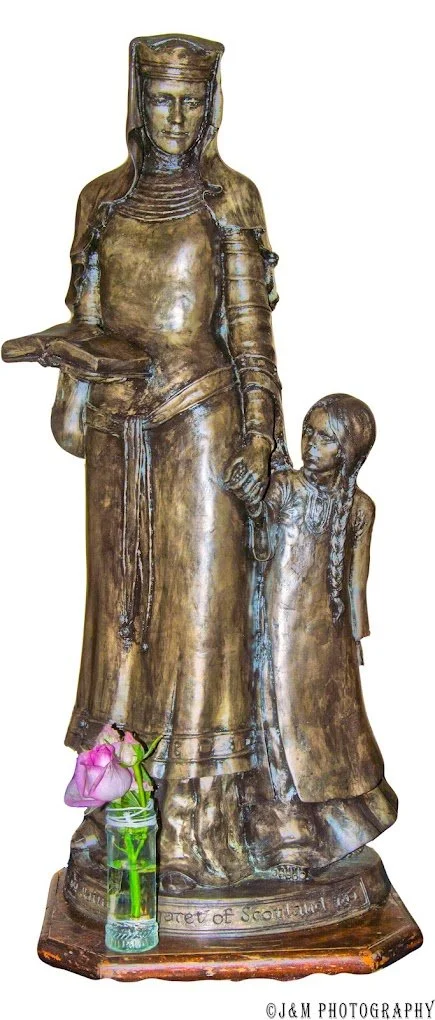
St. Margaret’s Memorial Catholic Church Dunfermline was designed by the famous architect Sir Robert Rowand Anderson, with financial support from the Marquis of Bute. Situated prominently on high ground in 1896, its original grand design was never completed. The present apsidal Chancel was added in the 1930’s. The Church has a strikingly large and spacious interior, in mediaeval style. Several notable works of art and various fine statues adorn the Church. Among them is the beautiful bronze sculpture of St. Margaret by Ann Davidson (pictured below).
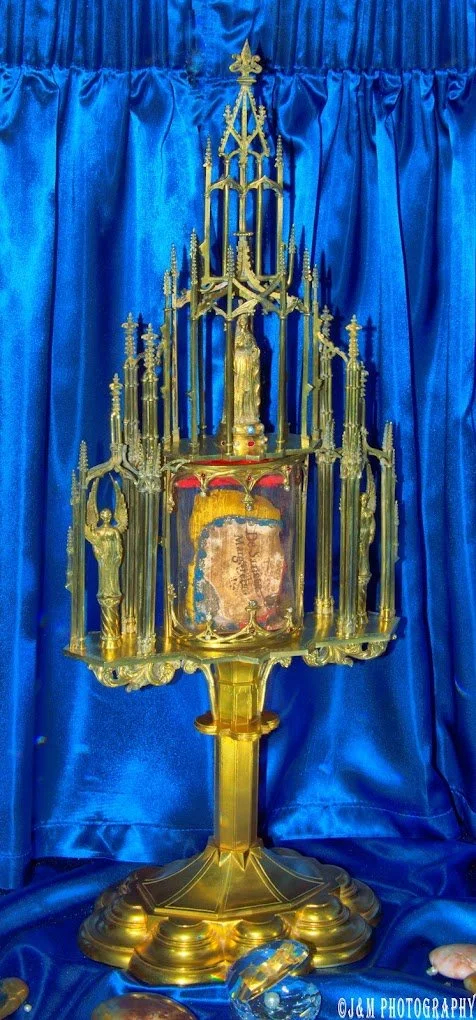
Two relics of St. Margaret are kept in this Church. They are a lock of hair, placed in a life-size bust, and a piece of shoulder bone, set in a fine mediaeval-style reliquary. The story of their preservation is remarkable. On the eve of the Scottish Reformation in 1560, the monks of Dunfermline Abbey, realising what was coming, had St. Margaret’s body removed. The lock of hair made its way to the Jesuits in Douai: the rest of her remains came eventually to the Palace of King Philip II of Spain in Madrid. That Palace was despoiled during the Napoleonic Peninsular Wars; but in 1863 Bishop Gillis, Vicar Apostolic of Scotland’s Eastern District, managed to recover the piece of bone now venerated in Dunfermline.
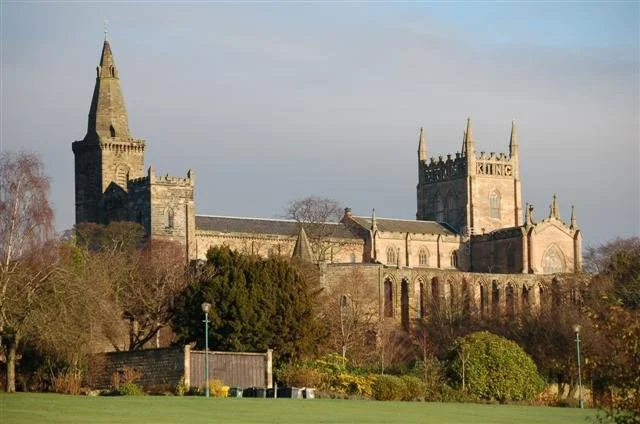
Dunfermline Abbey itself now exists in two separate parts. There is the great 12th century Nave of King David. But then all the rest of the Church is a 19th century reconstruction, built specifically for use by the Presbyterian Church of Scotland. Now there is much focus on King Robert the Bruce. His original shrine has gone, but a fine Victorian brass notes the spot where he was buried.
St. Margaret’s shrine and the original Chancel area is no more: all torn down and smashed up in 1560 by iconoclastic reformers. But the nave was pressed into service as a meeting place for the Kirk, and in that way preserved. Its fine West Doorway, pictured below, may perhaps have been rivalled, or even surpassed, by the West Doorway to the Nave at Pluscarden, whose foundations stones may still be seen just outside our shop.
Just by the Abbey stand various ruins. The walls of the great monastic refectory remain largely intact. Then hard by that also there is the Royal Palace. The last King to be born there was Charles I.
When we visited on 16 November 2026 the whole Abbey nave area was closed to the public, with works being carried out on its exterior. Happily for us, the kind Session Clerk who welcomed us had a key, and let us in. Already the evening gloom was descending and there was no electricity, but we were able to wander about freely in that magnificent space, which was uncluttered by any furniture whatever. Our Vespers were then perforce sung in the Chancel area: cheered on by both light and heat, and also by a small though appreciative congregation. Other prayers offered in the original Abbey Church were said or sung privately: all of course for the glory of God, the renewal of his Church, and the flourishing again of monastic life in this land.